
A broken foot raises the question this journal keeps asking: what is essential, and what is an extra? For readers in Schaumburg, Illinois, the answer starts with what treatment is meant to prevent.
The decision to get it examined
The decision is whether to seek treatment, and the case for it rests on what can happen without it. Cleveland Clinic says that if you don't seek medical treatment for a broken foot, your bones may heal out of their natural alignment. For breaks in the toes and forefoot, the Toe and Forefoot Fractures page from AAOS OrthoInfo is a second place to read how such a break is described.
What protection is meant to do
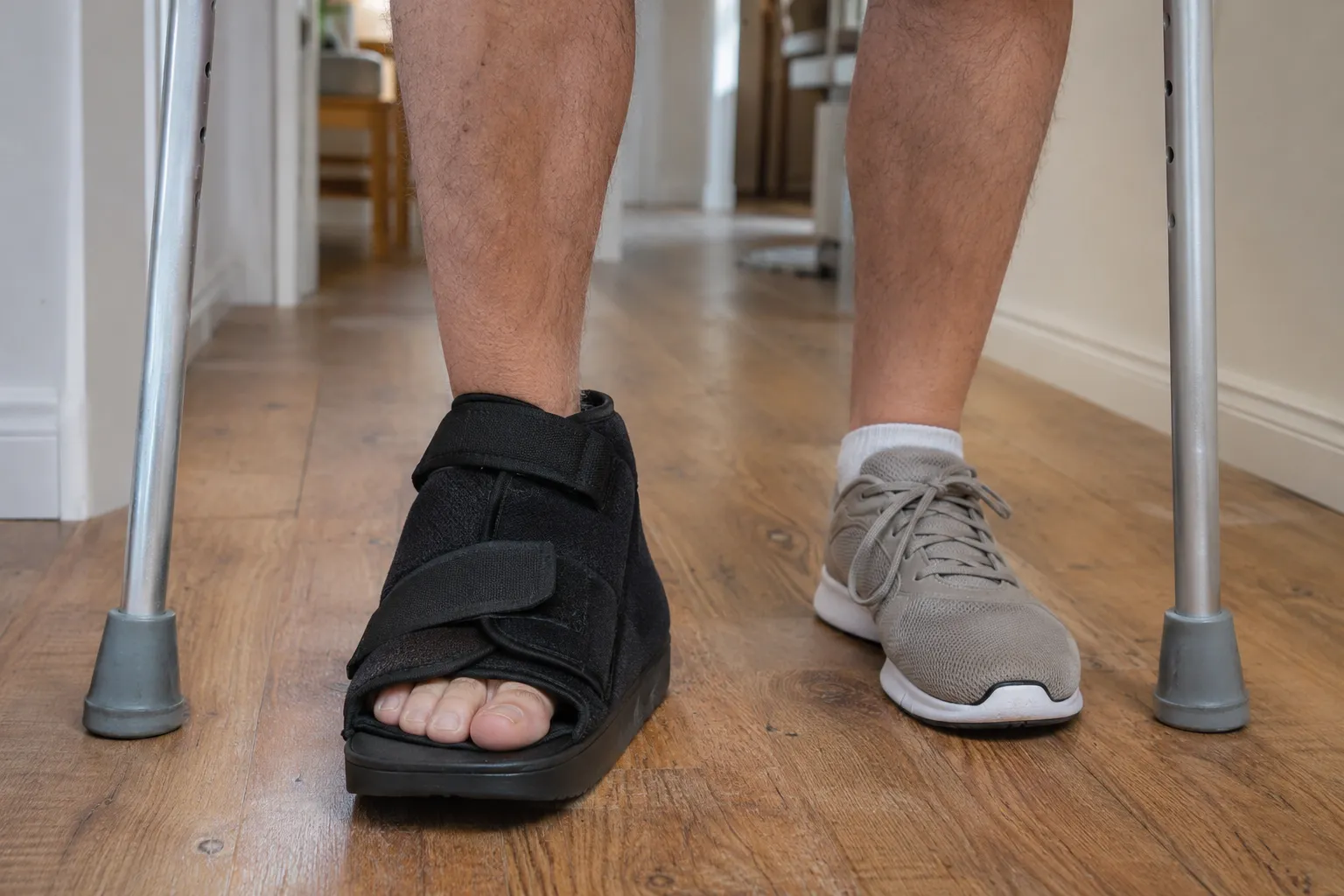
Cleveland Clinic says you'll most likely have to wear some type of cast, splint or a specially designed boot or shoe to protect your foot from further injury as the broken bone heals. The window is the length of healing, and the stated job is protection from further injury.
The fine print on narrow reports
Narrow reports deserve a narrow reading. One PubMed Central entry is a case report asking whether bone cement is safe for treating second metatarsal stress fractures, and its title poses safety as a question. Read a report's question before its headline.
Casts against braces and nothing extra
Compare each protective option with the plain alternatives. A PubMed Central meta-analysis of randomized controlled trials asks whether a removable brace is a viable alternative to cast immobilization for ankle fractures, which is the same comparison for the ankle that this page raises for the foot. Going without protection is the other comparison, and it would leave unmet the purpose Cleveland Clinic states above.
The verdict on a broken foot
Get a broken foot examined and wear the protection your clinician prescribes. Put your questions to the extras layered on top of that baseline. For aftercare wording on one kind of break, MedlinePlus offers aftercare instructions for metatarsal stress fractures, which are worth reading beside what your own clinician tells you.