
Recovering After Foot or Ankle Surgery
Recovery after foot or ankle surgery is the stretch in which the operated foot is protected while daily life carries on around it. The optional steps in that stretch are equipment, positioning routines, rehab programs and clot-prevention measures. For readers in Schaumburg weighing them, this page asks of each one what it adds and how soon.
Equipment and positioning
HSS Rehabilitation has prepared this material to help guide you through your recovery after your foot or ankle surgery. That is how HSS describes its own guidance, and it publishes a rehabilitation guide for the left foot or ankle alongside a matching guide for the right foot or ankle.
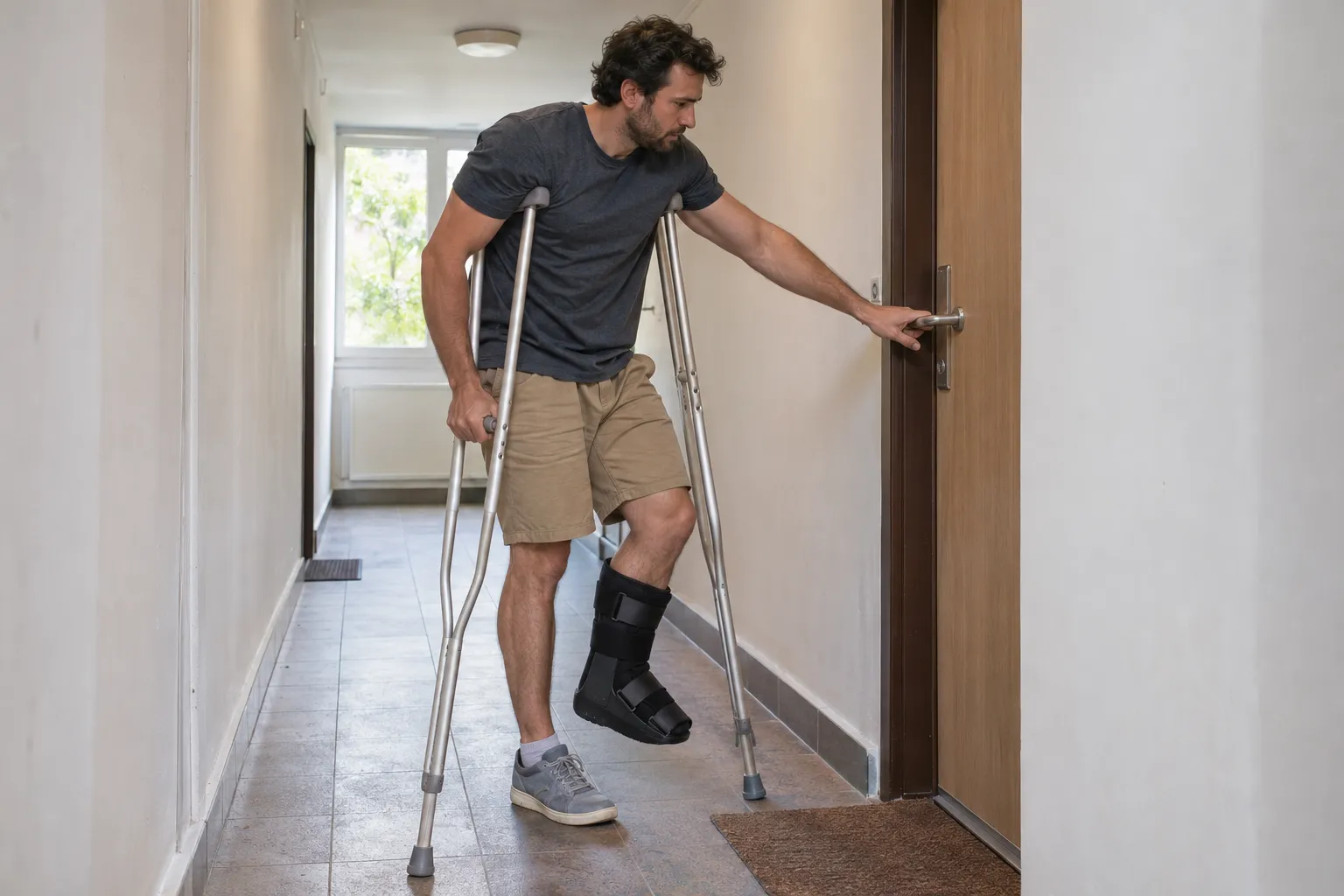
On equipment, the abstract of a trial on PubMed Central states: "Assistive devices facilitate daily activities and recovery, and are essential for nonweightbearing ambulation after orthopaedic foot or ankle surgery." The study itself is a randomized crossover trial of forearm crutches against hands-free single crutches after foot and ankle surgery, and its title names two measures, patient preferences and functional outcomes. Reporting them separately is a reminder that liking a device and recovering better with it are different claims.
Reading the articles by what they tell you about value
Two articles take up the clot question. How Orthopedic Teams Prevent Deep Vein Clots asks what the care team does and whether each measure has a stated benefit. Preventing Blood Clots After Surgery asks what that prevention is worth to the person recovering.
Rehab Milestones in the Weeks After Surgery lays the weeks out as a series of milestones, which gives any rehab add-on something to be measured against.
Where the benefit is documented and where it is assumed
The documented part is narrow. Assistive devices matter for getting around without putting weight on the foot, and a published trial compares two kinds. What is assumed is that a particular brand, bundle or upgrade does better than the standard option. Until a study measures that, treat the claim as unproven.
Provider-written patient information is a useful check on what you are being sold. The Foot and Ankle page from Calderdale and Huddersfield NHS Foundation Trust is an example of what a hospital tells its own patients to expect.
Next in the journal
Fractures raise the same question about casts, braces and healing estimates. Broken ankles and broken feet are the next topic worth reading for a reader weighing a similar choice.