
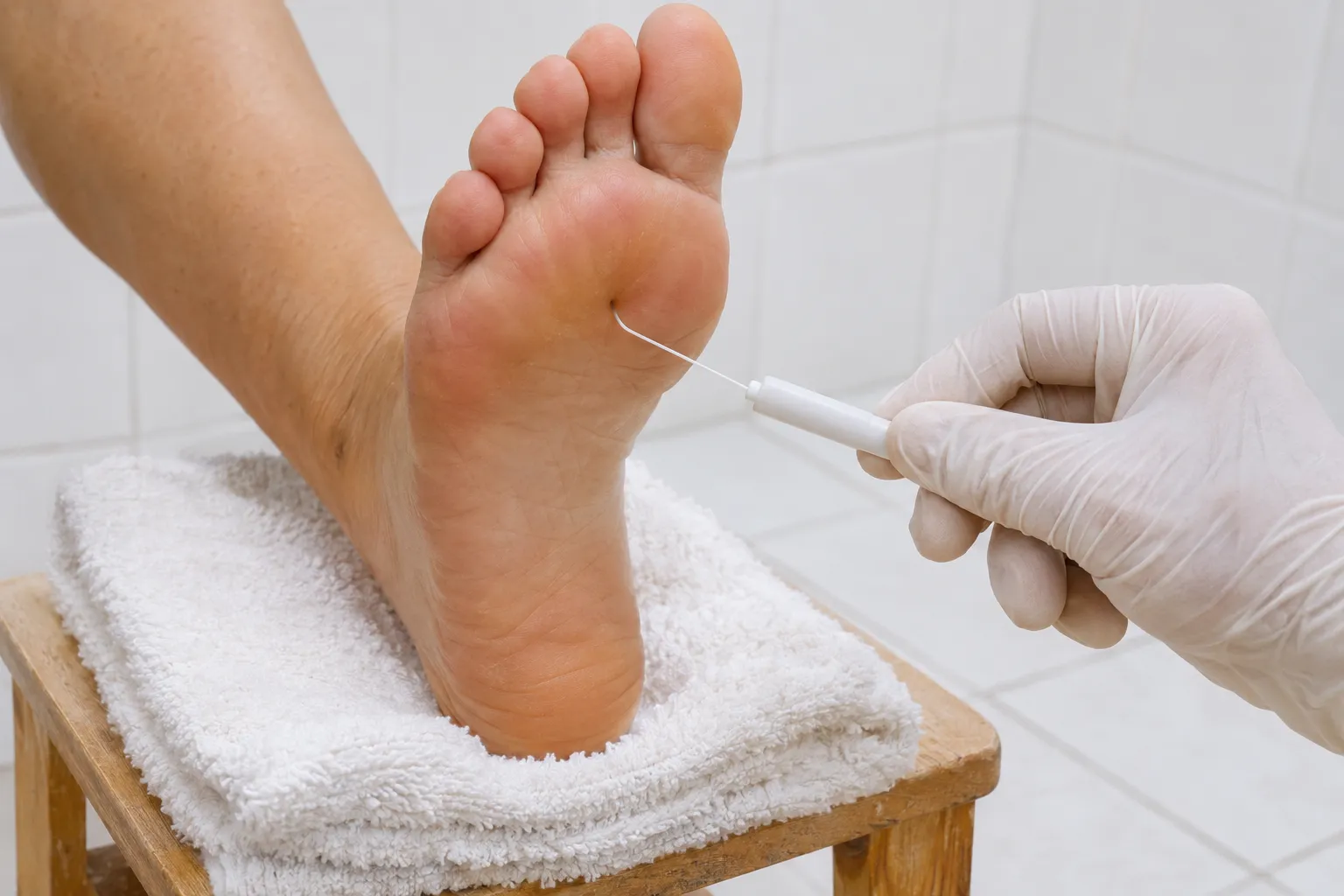
A recommended test deserves the question of what it is recommended for. This page asks it of the 10-g monofilament test, for readers in Schaumburg, Illinois.
The recommendation and who makes it
The decision is whether to ask for the test, and the claim attached to it is that it is the better screen. The American Academy of Family Physicians says screening diabetic patients for foot problems with the monofilament test is recommended over other conventional neurologic tests. For background on the condition behind the screen, the NIDDK page on diabetic neuropathy is a reference to read alongside.
What the test is said to show
The PubMed Central (NIH) entry uses the abbreviation LOPS, and its line reads that one of the most useful tests to determine LOPS is the 10-g monofilament test. The phrase "one of the most useful" places the test among its peers rather than above all of them.
The fine print in a comparison
The first source ranks the monofilament test against other conventional neurologic tests, so it is a comparison and not a promise about outcomes. The second names a 10-g test, which is a specific tool. To judge the wording in context, read the PubMed Central chapter on retinopathy, neuropathy, and foot care in the Standards of Care in Diabetes, 2025.
The test against nothing extra
Doing nothing extra leaves the screening question to whatever else your exam includes. The monofilament test adds one named, specific check to that exam, and it comes with a source for the recommendation.
The verdict on the monofilament test
Ask about it by name. If diabetes is part of your history, ask whether the 10-g monofilament test is part of your foot exam. The NHS page on the causes of peripheral neuropathy is a further reference on the condition, and your clinician can say what applies to you.